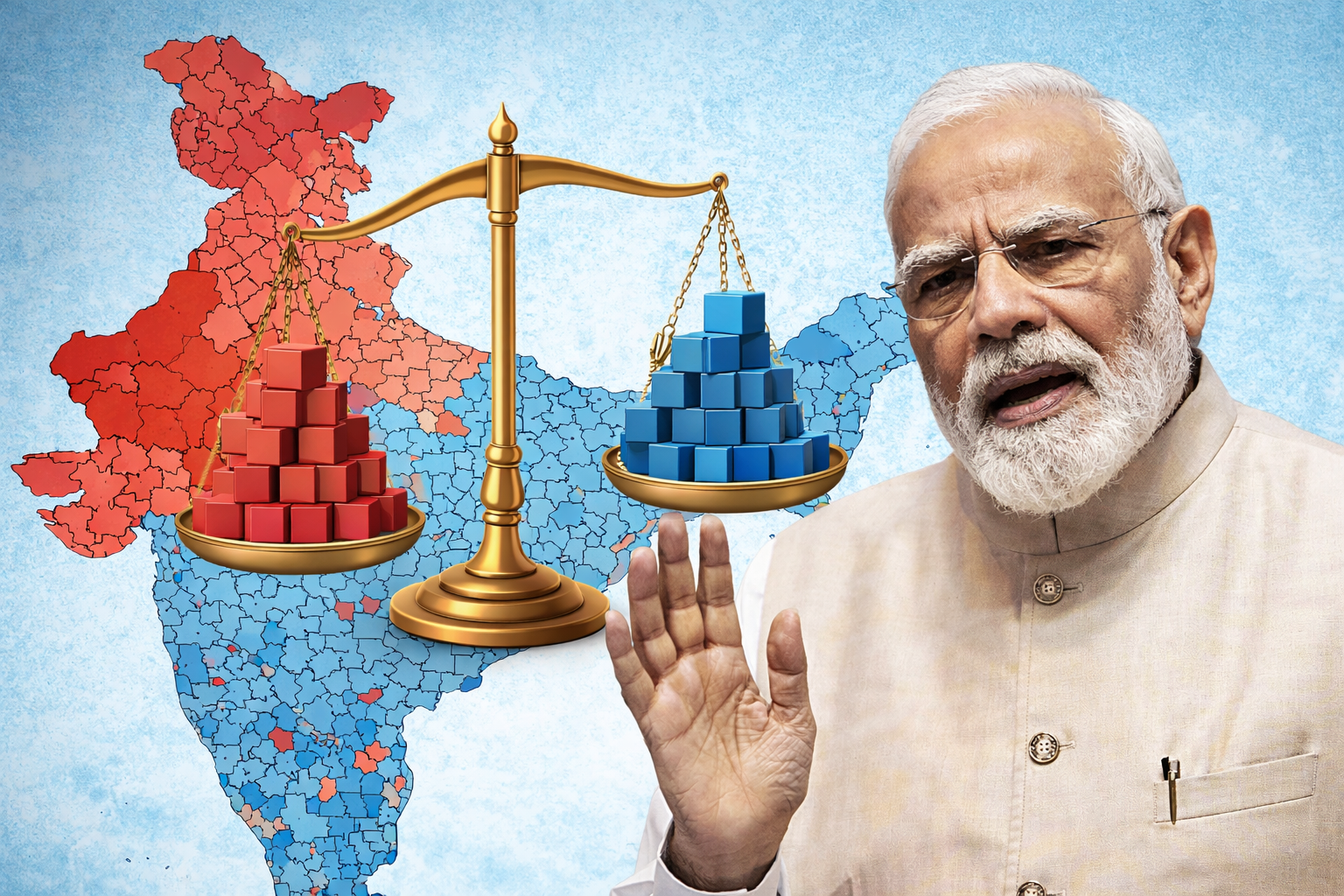
A Critical Breakdown of Political Strategy, Power Shifts, and What Comes Next
Women’s Quota-Delimitation Bill Fails and much of the debate is being deliberately misdirected. This wasn’t just about a bill failing. It was about India missing a structural correction that would have aligned representation with population realities while finally unlocking women’s political participation at scale. Prime Minister Narendra Modi made that explicit in his national address: this was not merely legislative resistance, it was a conscious political choice to delay equitable representation.
Table of Contents
- What Happened in Parliament
- The Core Principle: Equal Population, Equal Representation
- Why Delimitation Was Non-Negotiable and the Women’s Quota-Delimitation Bill Fails
- PM Modi’s Address: Reframing the Debate
- Opposition’s Position: Political Risk Over Structural Fairness
- Future Outlook
What Happened in Parliament
The Constitution (131st Amendment) Bill, 2026 aimed to:
- Expand Lok Sabha seats (up to ~850)
- Implement 33% reservation for women
- Redraw constituencies based on updated population data
The Vote Breakdown
- 298 in favor
- 230 against
- Required: 352 (two-thirds majority)
Despite majority support, the Women’s Quota-Delimitation Bill Fails, triggering the withdrawal of linked legislation.
This wasn’t a rejection by the House.
It was a coordinated block against a structural shift.
The Core Principle: Equal Population, Equal Representation
Here’s the part critics avoid because it’s hard to argue against.
The Logic
India’s electoral system is built on a simple democratic principle:
One person, one vote, equal value
But that principle is currently distorted.
The Reality Today
- Some MPs represent over 30 lakh people
- Others represent under 15 lakh people
That’s a 2x imbalance in representation weight.
What the Bill Attempted
- Redraw constituencies so that population per MP becomes more uniform
- Ensure that each citizen’s vote carries similar weight across India
This is not political manipulation.
This is basic democratic correction.
Why Delimitation Was Non-Negotiable
Critics argue that women’s reservation could have been implemented separately.
That argument falls apart under scrutiny.
Without Delimitation
- Reservation becomes a zero-sum redistribution of existing seats
- Political resistance increases internally within parties
- Implementation gets delayed indefinitely (as seen historically)
With Delimitation
- New seats create space for reservation without displacement
- Representation becomes both fair and inclusive
- Reform becomes executable not symbolic
Linking the two wasn’t a tactic.
It was the only realistic execution pathway.
PM Modi’s Address: Reframing the Debate
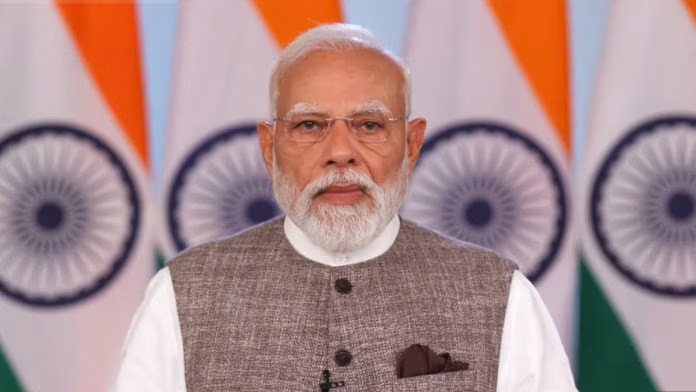
After the Women’s Quota-Delimitation Bill Fails, PM Modi didn’t dilute the message he sharpened it.
Key Takeaways
- Called the bill’s rejection a “foeticide of women’s rights” as the Women’s Quota-Delimitation Bill Fails
- Framed the issue as justice vs political self-interest
- Reaffirmed commitment to women’s reservation
Instead of engaging in procedural debate, the government shifted focus to:
Who is actually blocking women from entering Parliament?
Opposition’s Position: Political Risk Over Structural Fairness
Leaders like Rahul Gandhi and Mallikarjun Kharge argued that delimitation could disadvantage certain states.
That concern is politically understandable but structurally weak.
The Contradiction
- They support women’s reservation
- They oppose the only framework that enables it at scale
The Real Issue
Delimitation shifts power toward regions with higher population.
That’s not bias.
That’s representation aligning with reality.
Blocking it effectively means:
Preserving political advantage over ensuring equal democratic value per citizen
What Comes Next
Scenario 1: Separate Women’s Reservation Bill
- Politically easier
- Structurally weaker
Scenario 2: Revised Delimitation Model
- Introduce balancing safeguards
- Maintain population-based fairness
Scenario 3: Renewed Push by Government
- Rebuild consensus
- Reintroduce comprehensive reform
Strategic Insight
The uncomfortable truth:
India cannot simultaneously claim:
- Equal democracy
- Unequal representation
At some point, population must matter.
And when that happens, resistance will always come from those who stand to lose power.
Conclusion
Women’s Quota-Delimitation Bill Fails but the failure isn’t technical or procedural. It’s political.
The bill attempted to fix two long-standing issues at once:
- Underrepresentation of women
- Unequal weight of votes across constituencies
Blocking it preserves imbalance on both fronts.
The real question now isn’t whether reform will happen.
It’s how long political incentives will delay the inevitable.