Trump Iran ceasefire extension holds despite Hormuz ship seizures. Analyze oil surge, geopolitical risks, and what happens next.
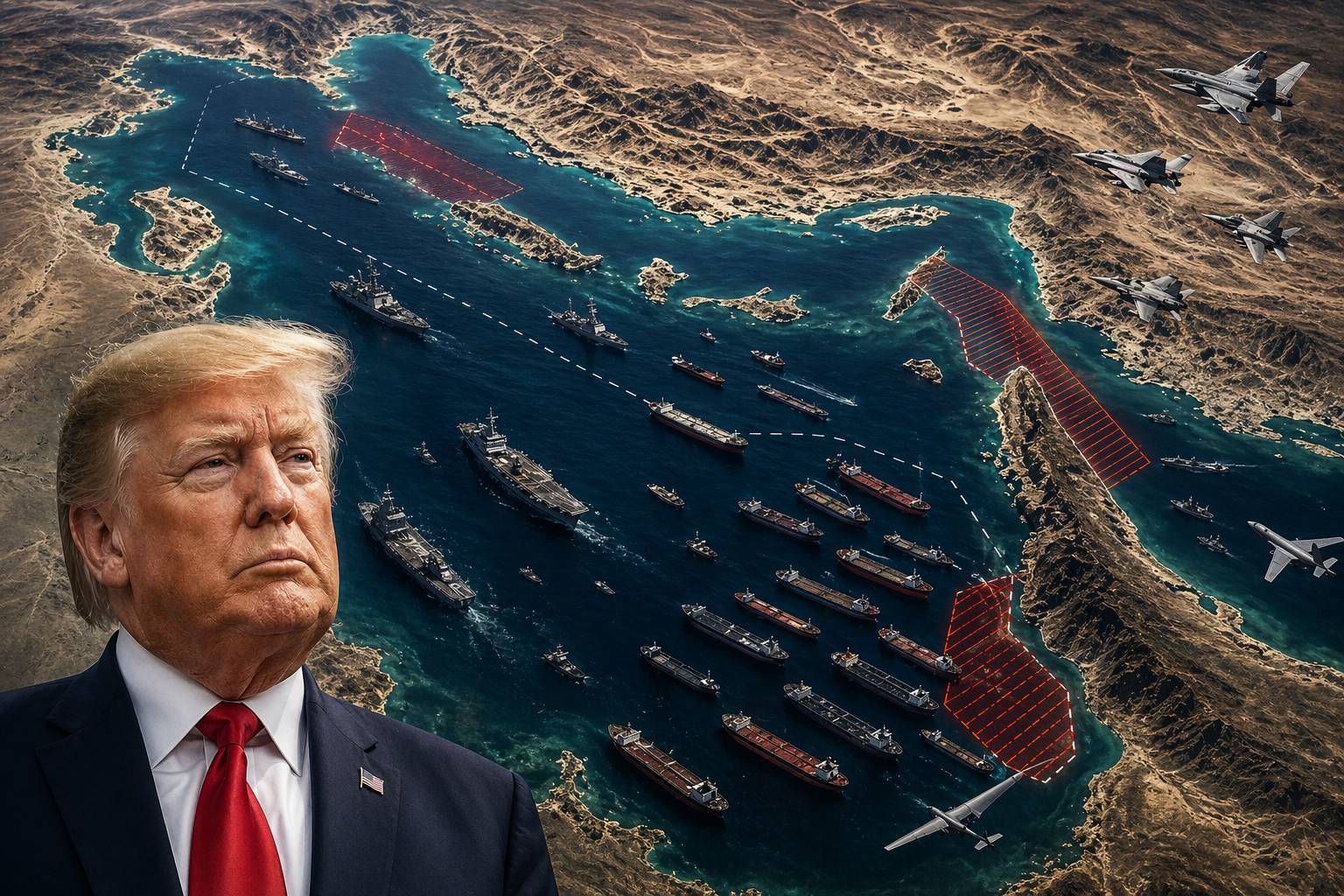
Trump Iran ceasefire extension is now being stress-tested in real time. Iran’s seizure of multiple vessels and direct firing on an India-bound ship has escalated tensions but Washington’s response has been unexpectedly restrained.
This is not a return to war. It’s something more complex.
The Trump Iran ceasefire extension is evolving into a strategic waiting game, where both sides are escalating tactically while avoiding full-scale conflict. Meanwhile, the Strait of Hormuz remains effectively choked turning this into a global economic problem, not just a regional one.
Table of Contents
- What Happened: The Ship Seizures
- Why the Trump Iran Ceasefire Extension Still Holds
- The $100 Oil Shock
- Maritime Escalation: Targeted Vessels
- Washington’s Strategic Shift
- Regional Spillover Risks
- Future Scenarios
What Happened: The Ship Seizures

The latest escalation under the Trump Iran ceasefire extension includes:
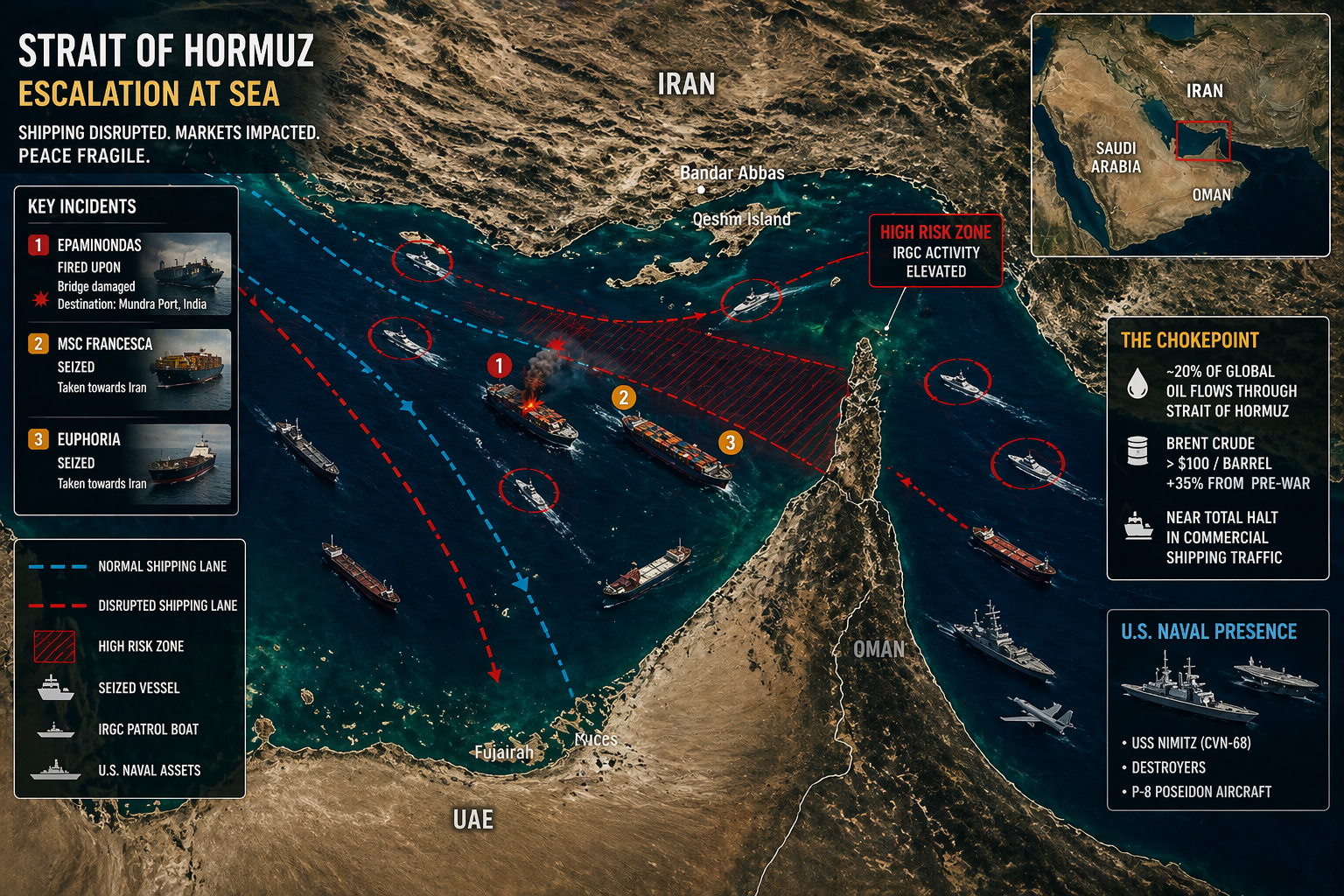
- Iran’s IRGC seizing two container ships
- Heavy gunfire on the Epaminondas, an India-bound vessel
- Near-total disruption of commercial shipping in Hormuz
This is not symbolic aggression. It’s targeted maritime coercion.
Why the Trump Iran Ceasefire Extension Still Holds
This is where the logic breaks—and where strategy begins.
Despite escalation, the Trump Iran ceasefire extension remains intact because:
1. Technical Loophole Diplomacy
- Seized ships are not US or Israeli
- Washington classifies this as non-ceasefire violation
This is deliberate narrative control.
2. Diplomatic Window Still Open
- US signals possible talks within 36–72 hours
- Pakistan remains the likely negotiation venue
The Trump Iran ceasefire extension is being used to buy negotiation time, not resolve conflict.
3. Controlled Escalation Strategy
Both sides are playing the same game:
- Iran → escalate economically (shipping disruption)
- US → avoid military retaliation, maintain pressure
The Trump Iran ceasefire extension survives because neither side wants to be blamed for breaking it.
The $100 Oil Shock
The biggest impact of the Trump Iran ceasefire extension isn’t military—it’s economic.
- Brent crude > $100/barrel
- ~35% increase from pre-conflict levels
- ~20% of global oil supply disrupted
This isn’t just an energy issue.
It cascades into:
- Higher logistics costs
- Inflation in food and goods
- Supply chain instability
Maritime Escalation: Targeted Vessels
The Trump Iran ceasefire extension is now defined by maritime targeting.
Key Incidents:
- Epaminondas (Liberia)
- Fired upon
- Severe bridge damage
- Destination: Mundra Port, India
- MSC Francesca (Panama)
- Seized
- Redirected toward Iran
- Euphoria (Panama)
- Seized
- Status unclear
Strategic takeaway:
Iran isn’t randomly attacking—it’s selectively disrupting global trade flows without triggering direct US retaliation.
Washington’s Strategic Shift
The Trump Iran ceasefire extension is exposing internal shifts in US strategy.
Key Developments:
- Navy Secretary resignation during peak crisis
- Shift from aggressive posture → measured restraint
- Public messaging: “Don’t overreact”
This signals one thing:
The US is prioritizing negotiation optics over immediate retaliation.
That’s risky.
Because restraint under pressure can be interpreted as weakness—or strategic patience.
Regional Spillover Risks
The Trump Iran ceasefire extension is not isolated to Hormuz.
Parallel Developments:
- Lebanon–Israel seeking truce extension
- Continued border skirmishes
- Iran linking Hormuz reopening to blockade removal
This creates a multi-front risk environment:
- Maritime conflict (Hormuz)
- Proxy tensions (Lebanon–Israel)
- Diplomatic uncertainty (Pakistan talks)
Everything is interconnected.
Future Scenarios
1. Negotiation Breakthrough (Low Probability)
- Talks resume in Islamabad
- Partial de-escalation
- Limited reopening of Hormuz
Problem: Trust deficit remains massive.
2. Controlled Escalation (Most Likely)
- More ship seizures
- Continued oil volatility
- Ceasefire technically intact
This is where the Trump Iran ceasefire extension becomes a long-term instability tool.
3. Sudden Military Escalation (High Impact)
- US retaliates after escalation threshold crossed
- Iran restricts Strait of Hormuz fully
- Oil spikes beyond $120
This is the breaking point scenario.
Conclusion
The Trump Iran ceasefire extension is no longer about stopping war—it’s about managing escalation.
- Ships are being seized
- Oil markets are destabilizing
- Military pressure is rising
Yet, diplomacy continues. That contradiction defines this crisis.
The Trump Iran ceasefire extension is not preventing conflict—it is reshaping how conflict is being fought. From airstrikes → to economic warfare → to maritime control.
And that shift is far more dangerous than it looks.